Most homeowners think about garage door repair only when the door stops working. It jams, it won’t open, it starts making harsh noises, or it suddenly feels unsafe. The problem is that by the time the garage door fully fails, the damage is often already expensive. That’s why the smarter approach is the same strategy used by IT professionals and security experts: catch problems early, diagnose precisely, and prevent major failure before it happens.
Sniff’Em is a network monitor built to analyze complex systems, track traffic behavior, troubleshoot performance issues, and uncover security vulnerabilities before they cause real damage. That same mindset works perfectly for garage door repair, because your garage door is also a system. It may not send digital traffic, but it sends signals through sound, movement, tension, vibration, and resistance. When those signals change, it’s usually the first sign that your system is drifting away from healthy operation.
When you treat your garage door like a monitored environment instead of a machine you ignore, you stay ahead of the expensive repairs.
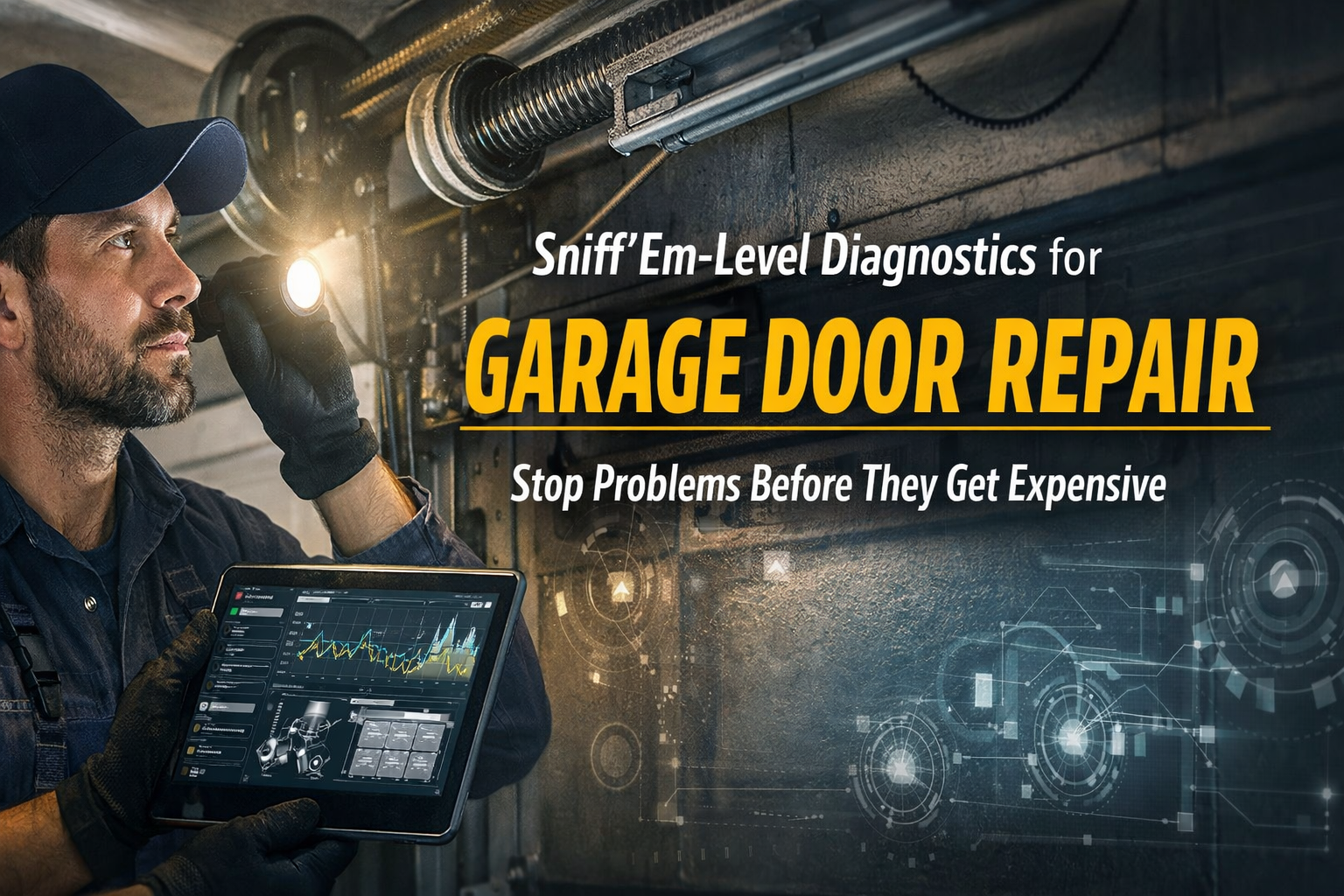
Why Garage Door Diagnostics Matter More Than Emergency Repairs
A garage door is one of the most used moving systems in a home, yet it’s also one of the most overlooked. It lifts hundreds of pounds repeatedly, deals with daily wear, and operates under high spring tension. Even a small imbalance or misalignment can cause stress to build up quietly over time. This is exactly how problems become expensive. Not instantly, but gradually, through accumulated strain that eventually forces a major part to fail.
Diagnostics-based garage door repair changes the entire outcome. Instead of reacting to a breakdown, a technician analyzes what’s happening inside the system while it’s still functioning. This makes it possible to correct small issues before they become emergency calls, damaged hardware, or safety risks.
Your Garage Door Works Like a System, Not a Single Part
Most people see a garage door as one big panel that goes up and down. In reality, it works more like a coordinated system where every part depends on the next. Springs carry the weight. Rollers guide movement. Cables maintain balance. Tracks provide alignment. The opener supports consistent performance, but it should never be doing heavy lifting that the spring system is meant to handle.
When one component becomes weaker, misaligned, or worn, the rest of the system compensates. That compensation creates friction, stress, and instability. Over time, the small issue spreads into larger damage. This is why a door that starts with a little noise eventually becomes a door that stops moving at all.
Sniff’Em-level diagnostics is about identifying the weak point before it becomes the failure point.
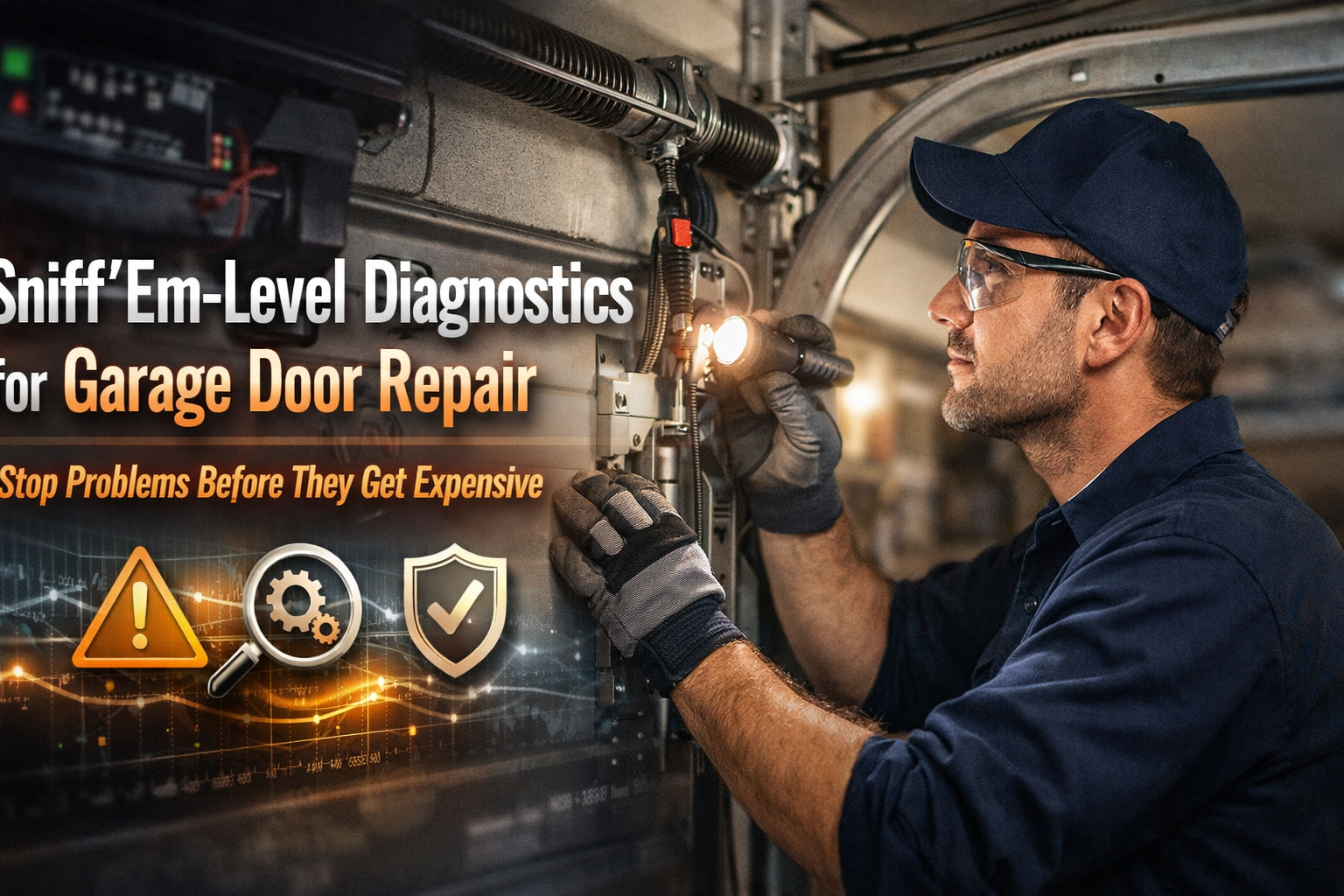
The Warning Signs That Usually Show Up Before Something Breaks
In network monitoring, abnormal patterns often appear before a system crash. With garage doors, the same thing happens. A small change in sound or movement is often your first alert. A door that starts moving slower than usual, even slightly, can be a sign of resistance, strain, or spring fatigue. A door that shakes during travel is often dealing with track alignment issues, worn rollers, or loose hinges. A door that closes unevenly or looks tilted may be developing tension imbalance, cable drift, or track movement.
One of the most dangerous signs is when the opener looks like it’s struggling. If the motor is forcing the door up or pushing harder than before, the system may be unbalanced or the springs may be losing strength. That’s how openers burn out early, and replacing an opener is never as affordable as preventing the strain in the first place.
What “Sniff’Em-Level Diagnostics” Looks Like in Garage Door Repair
Real diagnostics isn’t guesswork and it isn’t replacing parts randomly. It’s a structured inspection that looks at how the door behaves, how the hardware reacts under motion, and where wear is starting to become a threat. A good technician watches how smoothly the door travels, listens to where noise originates, checks whether the door remains balanced, and examines whether alignment is still correct.
A professional inspection also focuses on high-tension components because they are the most likely to cause serious failure. Springs, drums, and cables are under extreme pressure, and any wear in those areas can become unsafe quickly. Rollers and hinges are checked because friction and vibration create a domino effect that damages other parts. Tracks are examined because even a small bend or shift can slowly grind down your entire system.
The opener side is evaluated too, because if force settings or limits are incorrect, the motor can strain, reverse unexpectedly, or stop mid-cycle. The safety sensors also matter, since a garage door that can’t detect obstruction correctly becomes a real liability.
When these details are measured early, repairs stay affordable. When they’re ignored, the repair becomes a replacement.
Why Early Garage Door Repair Costs Less Every Time
Most costly garage door repairs do not happen suddenly. They happen because the early symptoms were ignored for weeks or months. A spring that becomes weaker over time makes the opener compensate until the motor fails. A roller that starts grinding creates track damage until the door wobbles and binds. A slight misalignment becomes a harsh jam, and then the door begins to pull hardware out of place.
Preventative repairs are cheaper because they address the cause, not the result. They protect the expensive parts by maintaining the system as a whole. They also reduce the chance of emergency situations, where the problem happens at the worst time, such as early morning when you need to leave, during travel prep, or late at night when the door won’t close.
The best garage door repair Los Angeles is the one that prevents the disaster from happening at all.
When Garage Door Problems Become a Real Safety Issue
A garage door can become dangerous when tension components start failing. A door that feels unusually heavy, drops faster than normal, leans to one side, or makes loud snapping sounds should never be ignored. Cables that look loose or frayed can fail unexpectedly. A door that reverses randomly may be responding to resistance that you can’t see. In all these situations, the safest move is to stop using the door and get a professional inspection.
Just like in cybersecurity, vulnerabilities aren’t always obvious until they create damage. The smartest solution is early detection and immediate correction.
The Best Way to Keep Your Garage Door Reliable All Year
A garage door doesn’t need constant service, but it does need periodic attention to stay smooth and safe. Regular tune-ups reduce friction, keep alignment stable, and prevent small hardware issues from spreading. A yearly safety inspection is often the difference between a door that lasts years longer and a door that fails unexpectedly and costs far more than it should have.
If your garage door is already showing signs of change, the ideal time to act is now, while it’s still functioning. That’s when diagnostics saves the most money.
Diagnose Like a Pro, Repair Like a Pro
Sniff’Em was designed for professionals and everyday users who want a clear view inside complex systems, so they can catch issues early, troubleshoot accurately, and stay protected. That same principle applies perfectly to garage door repair. Your garage door gives warnings before it fails, and if you treat those warnings like a signal instead of a nuisance, you avoid the expensive breakdowns that most homeowners end up paying for.
If your door is making new noises, moving differently, shaking, or struggling to lift smoothly, don’t wait for the emergency. Get it inspected, correct the weak points early, and keep your home safe, quiet, and reliable.